In October 1980, Atari organized what was likely the first truly large-scale gaming competition in history. The Space Invaders Championship drew over ten thousand participants across the United States, eventually crowning a national champion in a game that had been commercially available for less than two years. Nobody called it esports. Nobody imagined it would eventually grow into an industry generating billions of dollars, filling arenas, and creating career paths for thousands of people worldwide.
But the impulse behind that 1980 tournament — the desire to find out who could play best, to compete publicly, to measure skill against other players rather than just against the machine — has been present in gaming almost from the beginning. The history of competitive gaming is the story of how that impulse scaled.
The Arcade Era: Competition as Context
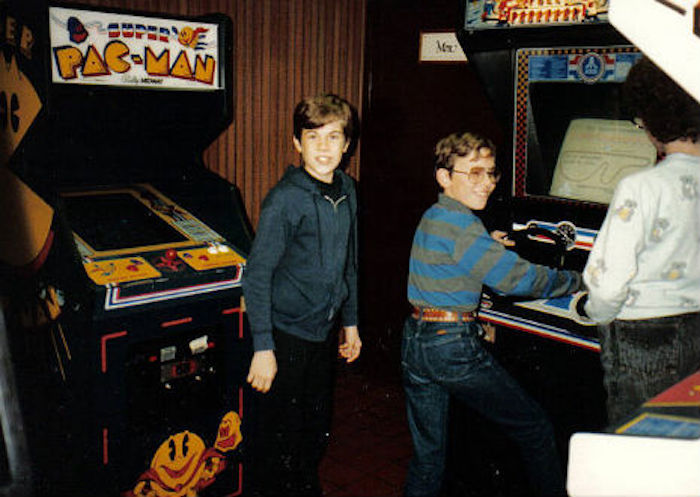
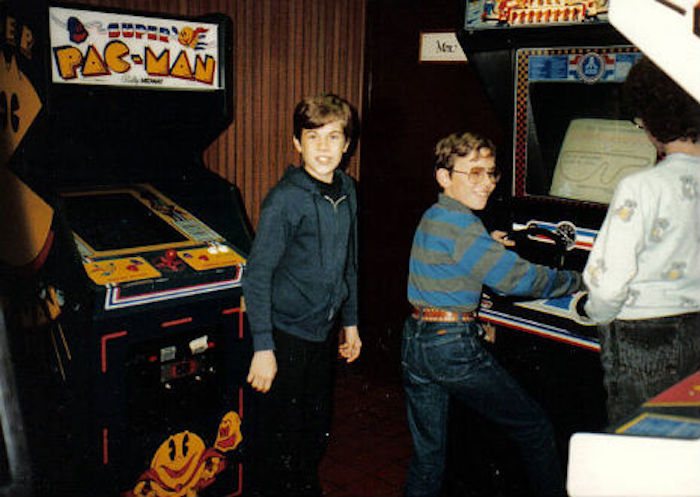
Before home consoles made gaming a private activity, arcades were inherently social spaces. The high score table was the original competitive framework — a persistent record of who had been there, what they'd achieved, and what the current best looked like. Getting your initials on the high score board at a local arcade was a genuine social achievement in the early 1980s.
These informal competitions mattered because they established gaming as something you could be demonstrably, publicly better at. The arcade environment created the cultural understanding that gaming was a skill with measurable gradations — not just something you did, but something you could do at different levels of quality.
Twin Galaxies, founded in 1981 by Walter Day, became the first organization to formally track and verify arcade high scores, creating a record book that functioned as the sport's first official rankings. The fact that these records were taken seriously — disputed, verified, celebrated — established an important precedent: gaming performance could be treated with the same rigor as any other competitive achievement.
LAN Parties and Early Tournaments: The 1990s
The shift from arcade to home computing in the late 1980s and early 1990s might have killed competitive gaming — private play doesn't lend itself to public competition. Instead, it transformed it. The development of networked multiplayer gaming, initially through local area networks (LANs) and eventually through the early internet, created entirely new competitive formats.
LAN parties — gatherings where players brought their computers and connected them physically to play together — became the primary community context for early multiplayer competition. They were labor-intensive, expensive, and limited by geography, but they were also where competitive communities were built, where rivalries formed, and where the culture of organized competitive play developed.
Quake, released in 1996 by id Software, became the first game with a genuinely organized international competitive scene. The game's fast-paced arena combat was both technically demanding and visually spectacular — qualities that made it compelling to watch as well as to play. This was not a coincidence that competitive gaming would forget: spectator value and competitive depth have remained linked throughout the medium's history.
Starcraft, released in 1998, deserves special mention in any history of competitive gaming. In South Korea, Starcraft became a genuine cultural phenomenon with professional leagues, television broadcasts, and players who were recognizable public figures. This was the first time gaming competition achieved mainstream cultural status in any country, and it demonstrated at scale what was possible.
Counter-Strike and the Rise of Team Competition
Counter-Strike began as a modification of Half-Life in 1999, and its ascent to competitive dominance was rapid. The game's format — two teams of five, one attempting to plant a bomb, one attempting to stop them — was immediately legible as a competitive structure. Players understood it without explanation. Teams could develop genuine tactical systems. Individual excellence was visible, but so was team coordination.
Counter-Strike established something critical for competitive gaming's eventual mainstream success: the sports-team model. Players could identify with organizations, follow rosters, understand dynamics between teammates. The social architecture that makes traditional sports compelling — team loyalty, rivalry, the narrative of a tournament — was now fully present in gaming competition.
Counter-Strike didn't just create a competitive game. It created the template for what organized competitive gaming would look like for the next two decades.
The MOBA Revolution: League of Legends and Dota 2
The Multiplayer Online Battle Arena genre — MOBAs — emerged from a Warcraft III custom map called Defense of the Ancients in the early 2000s. By the early 2010s, it had become the dominant competitive genre worldwide. Riot Games' League of Legends, launched in 2009, and Valve's Dota 2, launched in 2013, became the two most-watched esports titles on earth.
What MOBAs brought to competitive gaming was strategic depth accessible to spectators. Unlike the rapid, individual-driven action of early FPS competition, MOBA matches unfolded over thirty to sixty minutes, with clear phases, comprehensible objectives, and the kind of tactical maneuvering that knowledgeable viewers could appreciate in real time. The broadcast experience improved accordingly — better production, better analysis, better storytelling.
Dota 2's International tournament, first held in 2011 with a prize pool of one million dollars, demonstrated what was possible in esports economics. By 2019, the International's prize pool had exceeded thirty million dollars — funded in large part by players themselves through an in-game crowdfunding mechanic. The scale was difficult to ignore.
Streaming, Twitch, and the Viewing Revolution
The launch of Twitch in June 2011 changed competitive gaming in ways that are still unfolding. Live streaming removed the geographic constraint from watching competitive play. A tournament in South Korea or a high-skill player practicing in their bedroom was now accessible to anyone with an internet connection, anywhere in the world.
The cultural and economic consequences were significant. Streaming created individual gaming celebrities with direct relationships to audiences measured in millions. It created careers for players who were compelling to watch but not necessarily tournament-level competitors. It created an entirely new form of entertainment — watching someone play games live — that proved massively popular across age groups and geographies.
More specifically for competitive gaming, streaming created a persistent viewer base that was engaged, knowledgeable, and emotionally invested in players and organizations. This was the audience that justified the infrastructure investments — arena production, broadcast technology, analyst panels — that made modern esports look like professional sports rather than hobbyist gatherings.
The Current Landscape
Modern esports encompasses dozens of games across multiple genres, with professional leagues, franchise systems, and long-term player contracts modeled on traditional sports. Games like Valorant, Rocket League, Fortnite, and ongoing iterations of Counter-Strike run structured seasons with playoffs and championship events. College esports programs have proliferated. Several countries have recognized esports as an official sport.
The scale of what exists now would have been unimaginable to the participants of that 1980 Atari tournament. The League of Legends World Championship, held in different host cities annually, regularly fills venues with tens of thousands of in-person attendees while streaming to peaks of over seventy million concurrent viewers online.
What remains consistent, from the arcade high score tables to the modern stadium event, is the fundamental human desire that animated the whole thing: to test skill publicly, to compete, to find out who plays best. The technology and the scale have changed. The impulse hasn't.
Understanding this history matters because it helps explain both the current state of competitive gaming and its likely future trajectory. The structures being built now — leagues, teams, broadcast infrastructure, analytics — are the product of forty years of experimentation in how to organize competition around games. They're not arbitrary. They're the result of what worked and what didn't across decades of evolution.